Definitions
Cancers are a large family of diseases that involve abnormal
cell growth with the potential to invade or spread to other parts of the body.
[2][8] They form a subset of
neoplasms. A neoplasm or tumor is a group of cells that have undergone unregulated growth and will often form a mass or lump, but may be distributed diffusely.
[24][25]
The progression from normal cells to cells that can form a detectable mass to outright cancer involves multiple steps known as malignant progression.
[27][28]
Signs and symptoms

Symptoms of cancer
metastasisdepend on the location of the tumor.
When cancer begins, it produces no symptoms. Signs and symptoms appear as the mass grows or
ulcerates. The findings that result depend on the cancer's type and location. Few symptoms are
specific. Many frequently occur in individuals who have other conditions. Cancer is a "
great imitator". Thus, it is common for people diagnosed with cancer to have been treated for other diseases, which were hypothesized to be causing their symptoms.
[29]
People may become anxious or depressed post-diagnosis. The risk of suicide in people with cancer is approximately double.
[30]
Local symptoms
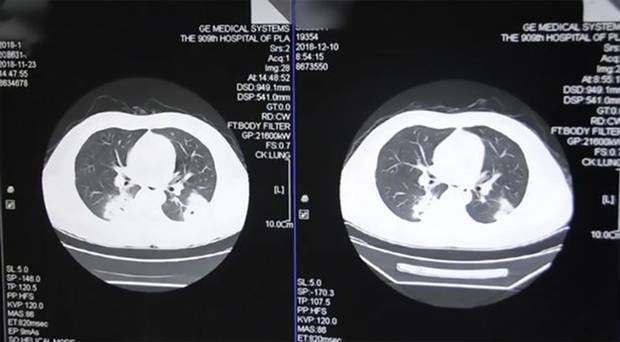
Local symptoms may occur due to the mass of the tumor or its ulceration. For example, mass effects from lung cancer can block the
bronchus resulting in cough or
pneumonia;
esophageal cancer can cause narrowing of the
esophagus, making it difficult or painful to swallow; and
colorectal cancer may lead to narrowing or blockages in the
bowel, affecting bowel habits. Masses in breasts or testicles may produce observable lumps.
Ulceration can cause bleeding that, if it occurs in the lung, will lead to
coughing up blood, in the bowels to
anemia or
rectal bleeding, in the bladder to
blood in the urine and in the uterus to vaginal bleeding. Although localized pain may occur in advanced cancer, the initial swelling is usually painless. Some cancers can cause a buildup of fluid within the chest or
abdomen.
[29]
Systemic symptoms
Metastasis
Cancer can spread from its original site by local spread, lymphatic spread to regional lymph nodes or by hematogenous spread via the blood to distant sites, known as metastasis. When cancer spreads by a hematogenous route, it usually spreads all over the body. However, cancer 'seeds' grow in certain selected site only ('soil') as hypothesized in the
soil and seed hypothesis of cancer metastasis. The symptoms of metastatic cancers depend on the tumor location and can include
enlarged lymph nodes (which can be felt or sometimes seen under the skin and are typically hard),
enlarged liver or
enlarged spleen, which can be felt in the
abdomen, pain or fracture of affected bones and
neurological symptoms.
[29]
Causes
The majority of cancers, some 90–95% of cases, are due to genetic mutations from
environmental factors.
[3] The remaining 5–10% are due to
inherited genetics.
[3] Environmental, as used by cancer researchers, means any cause that is not
inherited genetically, such as lifestyle, economic and behavioral factors and not merely pollution.
[32] Common environmental factors that contribute to cancer death include tobacco (25–30%), diet and
obesity (30–35%), infections (15–20%),
radiation (both ionizing and non-ionizing, up to 10%), stress, lack of
physical activity and pollution.
[3][33]
It is not generally possible to prove what caused a particular cancer because the various causes do not have specific fingerprints. For example, if a person who uses tobacco heavily develops lung cancer, then it was probably caused by the tobacco use, but since everyone has a small chance of developing lung cancer as a result of air pollution or radiation, the cancer may have developed for one of those reasons. Excepting the rare transmissions that occur with pregnancies and occasional
organ donors, cancer is generally not a
transmissible disease.
[34]
Chemicals

The incidence of lung cancer is highly correlated with smoking.
Exposure to particular substances have been linked to specific types of cancer. These substances are called
carcinogens.
Tobacco is responsible for about one in five cancer deaths worldwide
[37] and about one in three in the developed world.
[38] Lung cancer death rates in the United States have mirrored
smoking patterns, with increases in smoking followed by dramatic increases in lung cancer death rates and, more recently, decreases in smoking rates since the 1950s followed by decreases in lung cancer death rates in men since 1990.
[39][40]
In Western Europe, 10% of cancers in males and 3% of cancers in females are attributed to alcohol exposure, especially liver and digestive tract cancers.
[41] Cancer from work-related substance exposures may cause between 2 and 20% of cases,
[42] causing at least 200,000 deaths.
[43] Cancers such as lung cancer and
mesothelioma can come from inhaling tobacco smoke or
asbestos fibers, or
leukemia from exposure to
benzene.
[43]
Diet and exercise
Diet,
physical inactivity and
obesity are related to up to 30–35% of cancer deaths.
[3][44] In the United States, excess body weight is associated with the development of many types of cancer and is a factor in 14–20% of cancer deaths.
[44] A UK study including data on over 5 million people showed higher
body mass index to be related to at least 10 types of cancer and responsible for around 12,000 cases each year in that country.
[45] Physical inactivity is believed to contribute to cancer risk, not only through its effect on body weight but also through negative effects on the
immune system and
endocrine system.
[44]More than half of the effect from diet is due to
overnutrition (eating too much), rather than from eating too few vegetables or other healthful foods.
Some specific foods are linked to specific cancers. A high-salt diet is linked to
gastric cancer.
[46] Aflatoxin B1, a frequent food contaminant, causes liver cancer.
[46] Betel nut chewing can cause oral cancer.
[46] National differences in dietary practices may partly explain differences in cancer incidence. For example,
gastric cancer is more common in Japan due to its high-salt diet
[47] while
colon cancer is more common in the United States. Immigrant cancer profiles develop mirror that of their new country, often within one generation.
[48]
Infection
Worldwide approximately 18% of cancer deaths are related to
infectious diseases.
[3] This proportion ranges from a high of 25% in Africa to less than 10% in the developed world.
[3] Viruses are the usual infectious agents that cause cancer but
cancer bacteria and
parasites may also play a role.
Radiation
Ionizing radiation is not a particularly strong
mutagen.
[52] Residential exposure to
radon gas, for example, has similar cancer risks as
passive smoking.
[52] Radiation is a more potent source of cancer when combined with other cancer-causing agents, such as radon plus tobacco smoke.
[52] Radiation can cause cancer in most parts of the body, in all animals and at any age. Children and adolescents are twice as likely to develop radiation-induced leukemia as adults; radiation exposure before birth has ten times the effect.
[52]
Medical use of ionizing radiation is a small but growing source of radiation-induced cancers. Ionizing radiation may be used to treat other cancers, but this may, in some cases, induce a second form of cancer.
[52] It is also used in some kinds of
medical imaging.
[53]
Prolonged exposure to
ultraviolet radiation from the
sun can lead to
melanoma and other skin malignancies.
[54] Clear evidence establishes ultraviolet radiation, especially the non-ionizing medium wave
UVB, as the cause of most non-melanoma
skin cancers, which are the most common forms of cancer in the world.
[54]
Heredity
Taller people have an increased risk of cancer because they have more cells than shorter people. Since height is genetically determined to a large extent, taller people have a heritable increase of cancer risk.
[63]
Physical agents
Some substances cause cancer primarily through their physical, rather than chemical, effects.
[64] A prominent example of this is prolonged exposure to
asbestos, naturally occurring mineral fibers that are a major cause of
mesothelioma (cancer of the
serous membrane) usually the serous membrane surrounding the lungs.
[64] Other substances in this category, including both naturally occurring and synthetic asbestos-like fibers, such as
wollastonite,
attapulgite,
glass wool and
rock wool, are believed to have similar effects.
[64] Non-fibrous particulate materials that cause cancer include powdered metallic
cobalt and
nickel and
crystalline silica (
quartz,
cristobalite and
tridymite).
[64] Usually, physical carcinogens must get inside the body (such as through inhalation) and require years of exposure to produce cancer.
[64]
Physical trauma resulting in cancer is relatively rare.
[65] Claims that breaking bones resulted in bone cancer, for example, have not been proven.
[65] Similarly, physical trauma is not accepted as a cause for cervical cancer, breast cancer or brain cancer.
[65] One accepted source is frequent, long-term application of hot objects to the body. It is possible that repeated burns on the same part of the body, such as those produced by
kanger and kairo heaters (charcoal
hand warmers), may produce skin cancer, especially if carcinogenic chemicals are also present.
[65] Frequent consumption of scalding hot tea may produce esophageal cancer.
[65] Generally, it is believed that cancer arises, or a pre-existing cancer is encouraged, during the process of healing, rather than directly by the trauma.
[65] However, repeated injuries to the same tissues might promote excessive cell proliferation, which could then increase the odds of a cancerous mutation.
Hormones
Hormones are important agents in sex-related cancers, such as cancer of the breast,
endometrium, prostate, ovary and
testisand also of
thyroid cancer and
bone cancer.
[70] For example, the daughters of women who have breast cancer have significantly higher levels of
estrogen and
progesterone than the daughters of women without breast cancer. These higher hormone levels may explain their higher risk of breast cancer, even in the absence of a breast-cancer gene.
[70] Similarly, men of African ancestry have significantly higher levels of
testosterone than men of European ancestry and have a correspondingly higher level of prostate cancer.
[70] Men of Asian ancestry, with the lowest levels of testosterone-activating
androstanediol glucuronide, have the lowest levels of prostate cancer.
[70]
Other factors are relevant: obese people have higher levels of some hormones associated with cancer and a higher rate of those cancers.
[70] Women who take
hormone replacement therapy have a higher risk of developing cancers associated with those hormones.
[70] On the other hand, people who exercise far more than average have lower levels of these hormones and lower risk of cancer.
[70] Osteosarcoma may be promoted by
growth hormones.
[70] Some treatments and prevention approaches leverage this cause by artificially reducing hormone levels and thus discouraging hormone-sensitive cancers.
[70]
Autoimmune diseases
There is an association between
celiac disease and an increased risk of all cancers. People with untreated celiac disease have a higher risk, but this risk decreases with time after diagnosis and strict treatment, probably due to the adoption of a
gluten-free diet, which seems to have a protective role against development of malignancy in people with celiac disease. However, the delay in diagnosis and initiation of a gluten-free diet seems to increase the risk of malignancies.
[72] Rates of gastrointestinal cancers are increased in people with
Crohn's disease and
ulcerative colitis, due to chronic inflammation. Also,
immunomodulators and
biologic agents used to treat these diseases may promote developing extra-intestinal malignancies.
[73]
Pathophysiology
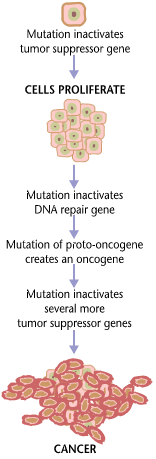
Cancers are caused by a series of mutations. Each mutation alters the behavior of the cell somewhat.
Genetics
Cancer is fundamentally a disease of tissue growth regulation. In order for a normal cell to
transform into a cancer cell, the
genes that regulate cell growth and differentiation must be altered.
[74]
The affected genes are divided into two broad categories.
Oncogenes are genes that promote cell growth and reproduction.
Tumor suppressor genes are genes that inhibit cell division and survival. Malignant transformation can occur through the formation of novel oncogenes, the inappropriate over-expression of normal oncogenes, or by the under-expression or disabling of tumor suppressor genes. Typically, changes in multiple genes are required to transform a normal cell into a cancer cell.
[75]
Genetic changes can occur at different levels and by different mechanisms. The gain or loss of an entire
chromosome can occur through errors in
mitosis. More common are
mutations, which are changes in the
nucleotide sequence of genomic DNA.
Large-scale mutations involve the deletion or gain of a portion of a chromosome.
Genomic amplification occurs when a cell gains copies (often 20 or more) of a small chromosomal locus, usually containing one or more oncogenes and adjacent genetic material.
Translocation occurs when two separate chromosomal regions become abnormally fused, often at a characteristic location. A well-known example of this is the
Philadelphia chromosome, or translocation of chromosomes 9 and 22, which occurs in
chronic myelogenous leukemia and results in production of the
BCR-
abl fusion protein, an oncogenic
tyrosine kinase.
Small-scale mutations include point mutations, deletions, and insertions, which may occur in the
promoter region of a gene and affect its
expression, or may occur in the gene's
coding sequence and alter the function or stability of its
protein product. Disruption of a single gene may also result from
integration of genomic material from a
DNA virus or
retrovirus, leading to the expression of
viral oncogenes in the affected cell and its descendants.
Replication of the data contained within the DNA of living cells will
probabilistically result in some errors (mutations). Complex error correction and prevention is built into the process and safeguards the cell against cancer. If a significant error occurs, the damaged cell can self-destruct through programmed cell death, termed
apoptosis. If the error control processes fail, then the mutations will survive and be passed along to
daughter cells.
Some environments make errors more likely to arise and propagate. Such environments can include the presence of disruptive substances called
carcinogens, repeated physical injury, heat, ionising radiation or
hypoxia.
[76]
The errors that cause cancer are self-amplifying and compounding, for example:
- A mutation in the error-correcting machinery of a cell might cause that cell and its children to accumulate errors more rapidly.
- A further mutation in an oncogene might cause the cell to reproduce more rapidly and more frequently than its normal counterparts.
- A further mutation may cause loss of a tumor suppressor gene, disrupting the apoptosis signaling pathway and immortalizing the cell.
- A further mutation in the signaling machinery of the cell might send error-causing signals to nearby cells.
The transformation of a normal cell into cancer is akin to a
chain reaction caused by initial errors, which compound into more severe errors, each progressively allowing the cell to escape more controls that limit normal tissue growth. This rebellion-like scenario is an undesirable
survival of the fittest, where the driving forces of
evolution work against the body's design and enforcement of order. Once cancer has begun to develop, this ongoing process, termed
clonal evolution, drives progression towards more invasive
stages.
[77] Clonal evolution leads to intra-
tumour heterogeneity (cancer cells with heterogeneous mutations) that complicates designing effective treatment strategies.
Characteristic abilities developed by cancers are divided into categories, specifically evasion of apoptosis, self-sufficiency in growth signals, insensitivity to anti-growth signals, sustained angiogenesis, limitless replicative potential, metastasis, reprogramming of energy metabolism and evasion of immune destruction.
[27][28]
Epigenetics

The central role of DNA damage and epigenetic defects in DNA repair genes in carcinogenesis
The classical view of cancer is a set of diseases that are driven by progressive genetic abnormalities that include mutations in tumor-suppressor genes and oncogenes and chromosomal abnormalities. Later
epigenetic alterations' role was identified.
[78]
Epigenetic alterations refer to functionally relevant modifications to the genome that do not change the nucleotide sequence. Examples of such modifications are changes in
DNA methylation (hypermethylation and hypomethylation),
histone modification[79]and changes in chromosomal architecture (caused by inappropriate expression of proteins such as
HMGA2 or
HMGA1).
[80] Each of these alterations regulates gene expression without altering the underlying
DNA sequence. These changes may remain through
cell divisions, last for multiple generations and can be considered to be epimutations (equivalent to mutations).
Epigenetic alterations occur frequently in cancers. As an example, one study listed protein coding genes that were frequently altered in their methylation in association with colon cancer. These included 147 hypermethylated and 27 hypomethylated genes. Of the hypermethylated genes, 10 were hypermethylated in 100% of colon cancers and many others were hypermethylated in more than 50% of colon cancers.
[81]
While epigenetic alterations are found in cancers, the epigenetic alterations in DNA repair genes, causing reduced expression of DNA repair proteins, may be of particular importance. Such alterations are thought to occur early in progression to cancer and to be a likely cause of the
genetic instability characteristic of cancers.
[82][83][84][85]
Reduced expression of DNA repair genes disrupts DNA repair. This is shown in the figure at the 4th level from the top. (In the figure, red wording indicates the central role of DNA damage and defects in DNA repair in progression to cancer.) When DNA repair is deficient DNA damage remains in cells at a higher than usual level (5th level) and cause increased frequencies of mutation and/or epimutation (6th level). Mutation rates increase substantially in cells defective in
DNA mismatch repair[86][87]or in
homologous recombinational repair (HRR).
[88] Chromosomal rearrangements and aneuploidy also increase in HRR defective cells.
[89]
Higher levels of DNA damage cause increased mutation (right side of figure) and increased epimutation. During repair of DNA double strand breaks, or repair of other DNA damage, incompletely cleared repair sites can cause epigenetic gene silencing.
[90][91]
Deficient expression of DNA repair proteins due to an inherited mutation can increase cancer risks. Individuals with an inherited impairment in any of 34 DNA repair genes (see article
DNA repair-deficiency disorder) have increased cancer risk, with some defects ensuring a 100% lifetime chance of cancer (e.g. p53 mutations).
[92] Germ line DNA repair mutations are noted on the figure's left side. However, such
germline mutations (which cause highly penetrant cancer syndromes) are the cause of only about 1 percent of cancers.
[93]
In sporadic cancers, deficiencies in DNA repair are occasionally caused by a mutation in a DNA repair gene but are much more frequently caused by epigenetic alterations that reduce or silence expression of DNA repair genes. This is indicated in the figure at the 3rd level. Many studies of heavy metal-induced carcinogenesis show that such heavy metals cause a reduction in expression of DNA repair enzymes, some through epigenetic mechanisms. DNA repair inhibition is proposed to be a predominant mechanism in heavy metal-induced carcinogenicity. In addition, frequent epigenetic alterations of the DNA sequences code for small RNAs called
microRNAs (or miRNAs). miRNAs do not code for proteins, but can "target" protein-coding genes and reduce their expression.
Cancers usually arise from an assemblage of mutations and epimutations that confer a selective advantage leading to clonal expansion (see
Field defects in progression to cancer). Mutations, however, may not be as frequent in cancers as epigenetic alterations. An average cancer of the breast or colon can have about 60 to 70 protein-altering mutations, of which about three or four may be "driver" mutations and the remaining ones may be "passenger" mutations.
[94]
Metastasis
Metastasis is the spread of cancer to other locations in the body. The dispersed tumors are called metastatic tumors, while the original is called the primary tumor. Almost all cancers can metastasize.
[95] Most cancer deaths are due to cancer that has metastasized.
[96]
Metastasis is common in the late stages of cancer and it can occur via the blood or the
lymphatic system or both. The typical steps in metastasis are local
invasion,
intravasation into the blood or lymph, circulation through the body,
extravasation into the new tissue, proliferation and
angiogenesis. Different types of cancers tend to metastasize to particular organs, but overall the most common places for metastases to occur are the
lungs,
liver, brain and the
bones.
[95]
Diagnosis

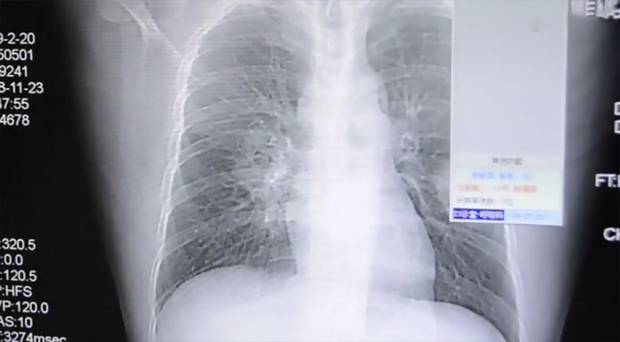
Chest
x-ray showing lung cancer in the left lung
Most cancers are initially recognized either because of the appearance of signs or symptoms or through
screening. Neither of these leads to a definitive diagnosis, which requires the examination of a tissue sample by a
pathologist. People with suspected cancer are investigated with
medical tests. These commonly include
blood tests,
X-rays, (
contrast)
CT scans and
endoscopy.
The tissue
diagnosis from the biopsy indicates the type of cell that is proliferating, its
histological grade, genetic abnormalities and other features. Together, this information is useful to evaluate the
prognosis and to choose the best treatment.
Classification
Cancers are classified by the
type of cell that the tumor cells resemble and is therefore presumed to be the origin of the tumor. These types include:
- Carcinoma: Cancers derived from epithelial cells. This group includes many of the most common cancers and include nearly all those in the breast, prostate, lung, pancreas and colon.
- Sarcoma: Cancers arising from connective tissue (i.e. bone, cartilage, fat, nerve), each of which develops from cells originating in mesenchymal cells outside the bone marrow.
- Lymphoma and leukemia: These two classes arise from hematopoietic (blood-forming) cells that leave the marrow and tend to mature in the lymph nodes and blood, respectively.[97]
- Germ cell tumor: Cancers derived from pluripotent cells, most often presenting in the testicle or the ovary (seminoma and dysgerminoma, respectively).
- Blastoma: Cancers derived from immature "precursor" cells or embryonic tissue.
Cancers are usually named using
-carcinoma,
-sarcoma or
-blastoma as a suffix, with the Latin or Greek word for the
organ or tissue of origin as the root. For example, cancers of the liver
parenchyma arising from malignant epithelial cells is called
hepatocarcinoma, while a malignancy arising from primitive liver precursor cells is called a
hepatoblastoma and a cancer arising from fat cells is called a
liposarcoma. For some common cancers, the English organ name is used. For example, the most common type of breast cancer is called
ductal carcinoma of the breast. Here, the adjective
ductal refers to the appearance of cancer under the microscope, which suggests that it has originated in the milk ducts.
Benign tumors (which are not cancers) are named using
-oma as a suffix with the organ name as the root. For example, a benign tumor of smooth muscle cells is called a
leiomyoma (the common name of this frequently occurring benign tumor in the uterus is
fibroid). Confusingly, some types of cancer use the
-noma suffix, examples including
melanoma and
seminoma.
An invasive
ductal carcinoma of the breast (pale area at the center) surrounded by spikes of whitish scar tissue and yellow fatty tissue
-
-
-
Prevention
Cancer prevention is defined as active measures to decrease cancer risk.
[98] The vast majority of cancer cases are due to environmental risk factors. Many of these environmental factors are controllable lifestyle choices. Thus, cancer is generally preventable.
[99] Between 70% and 90% of common cancers are due to environmental factors and therefore potentially preventable.
[100]
Dietary
While many dietary recommendations have been proposed to reduce cancer risks, the evidence to support them is not definitive.
[14][102] The primary dietary factors that increase risk are
obesity and alcohol consumption. Diets low in fruits and vegetables and high in red meat have been implicated but reviews and meta-analyses do not come to a consistent conclusion.
[103][104] A 2014 meta-analysis find no relationship between fruits and vegetables and cancer.
[105] Coffee is associated with a reduced risk of
liver cancer.
[106] Studies have linked excess consumption of
red or
processed meat to an increased risk of
breast cancer,
colon cancer and
pancreatic cancer, a phenomenon that could be due to the presence of
carcinogens in meats cooked at high temperatures.
[107][108] In 2015 the
IARC reported that eating
processed meat (e.g.,
bacon,
ham,
hot dogs,
sausages) and, to a lesser degree,
red meat was linked to some cancers.
[109][110]
Medication
Vitamin supplementation does not appear to be effective at preventing cancer.
[117] While low blood levels of
vitamin D are correlated with increased cancer risk,
[118][119][120] whether this relationship is causal and vitamin D supplementation is protective is not determined.
[121][122] One 2014 review found that supplements had no significant effect on cancer risk.
[122]Another 2014 review concluded that vitamin D
3 may decrease the risk of death from cancer (one fewer death in 150 people treated over 5 years), but concerns with the quality of the data were noted.
[123]
Beta-carotene supplementation increases lung cancer rates in those who are high risk.
[124] Folic acid supplementation is not effective in preventing colon cancer and may increase colon polyps.
[125] It is unclear if selenium supplementation has an effect.
[126][needs update]
Vaccination
Screening
Cancer screening is not available for many types of cancers. Even when tests are available, they may not be recommended for everyone.
Universal screening or
mass screening involves screening everyone.
[130] Selective screening identifies people who are at higher risk, such as people with a family history.
[130] Several factors are considered to determine whether the benefits of screening outweigh the risks and the costs of screening.
[129] These factors include:
- Possible harms from the screening test: for example, X-ray images involve exposure to potentially harmful ionizing radiation
- The likelihood of the test correctly identifying cancer
- The likelihood that cancer is present: Screening is not normally useful for rare cancers.
- Possible harms from follow-up procedures
- Whether suitable treatment is available
- Whether early detection improves treatment outcomes
- Whether the cancer will ever need treatment
- Whether the test is acceptable to the people: If a screening test is too burdensome (for example, extremely painful), then people will refuse to participate.[130]
- Cost
Recommendations
U.S. Preventive Services Task Force
- Strongly recommends cervical cancer screening in women who are sexually active and have a cervix at least until the age of 65.[131]
- Recommend that Americans be screened for colorectal cancer via fecal occult blood testing, sigmoidoscopy, or colonoscopy starting at age 50 until age 75.[132]
- Evidence is insufficient to recommend for or against screening for skin cancer,[133] oral cancer,[134] lung cancer,[135] or prostate cancer in men under 75.[136]
- Routine screening is not recommended for bladder cancer,[137] testicular cancer,[138] ovarian cancer,[139] pancreatic cancer,[140] or prostate cancer.[141]
- Recommends mammography for breast cancer screening every two years from ages 50–74, but does not recommend either breast self-examination or clinical breast examination.[142] A 2013 Cochrane review concluded that breast cancer screening by mammography had no effect in reducing mortality because of overdiagnosis and overtreatment.[143]
Japan
Genetic testing
| Gene | Cancer types |
|---|
| BRCA1, BRCA2 | Breast, ovarian, pancreatic |
| HNPCC, MLH1, MSH2, MSH6, PMS1, PMS2 | Colon, uterine, small bowel, stomach, urinary tract |
Genetic testing for individuals at high-risk of certain cancers is recommended by unofficial groups.
[128][144] Carriers of these mutations may then undergo enhanced surveillance, chemoprevention, or preventative surgery to reduce their subsequent risk.
[144]
Management
Chemotherapy
Targeted therapy is a form of chemotherapy that targets specific molecular differences between cancer and normal cells. The first targeted therapies blocked the
estrogen receptor molecule, inhibiting the growth of breast cancer. Another common example is the class of
Bcr-Abl inhibitors, which are used to treat
chronic myelogenous leukemia (CML).
[4] Currently, targeted therapies exist for many of the most common cancer types, including
bladder cancer,
breast cancer,
colorectal cancer,
kidney cancer,
leukemia,
liver cancer,
lung cancer,
lymphoma,
pancreatic cancer,
prostate cancer,
skin cancer, and
thyroid cancer as well as other cancer types.
[146]
The efficacy of chemotherapy depends on the type of cancer and the stage. In combination with surgery, chemotherapy has proven useful in cancer types including breast cancer, colorectal cancer,
pancreatic cancer,
osteogenic sarcoma,
testicular cancer, ovarian cancer and certain lung cancers.
[147] Chemotherapy is curative for some cancers, such as some
leukemias,
[148][149] ineffective in some
brain tumors,
[150] and needless in others, such as most
non-melanoma skin cancers.
[151] The effectiveness of chemotherapy is often limited by its toxicity to other tissues in the body. Even when chemotherapy does not provide a permanent cure, it may be useful to reduce symptoms such as pain or to reduce the size of an inoperable tumor in the hope that surgery will become possible in the future.
Radiation
Radiation therapy involves the use of
ionizing radiation in an attempt to either cure or improve symptoms. It works by damaging the DNA of cancerous tissue, killing it. To spare normal tissues (such as skin or organs, which radiation must pass through to treat the tumor), shaped radiation beams are aimed from multiple exposure angles to intersect at the tumor, providing a much larger dose there than in the surrounding, healthy tissue. As with chemotherapy, cancers vary in their response to radiation therapy.
[152][153][154]
Radiation therapy is used in about half of cases. The radiation can be either from internal sources (
brachytherapy) or external sources. The radiation is most commonly low energy x-rays for treating skin cancers, while higher energy x-rays are used for cancers within the body.
[155] Radiation is typically used in addition to surgery and or chemotherapy. For certain types of cancer, such as early
head and neck cancer, it may be used alone.
[156] For painful bone metastasis, it has been found to be effective in about 70% of patients.
[156]
Surgery
Surgery is the primary method of treatment for most isolated, solid cancers and may play a role in palliation and prolongation of survival. It is typically an important part of definitive diagnosis and staging of tumors, as biopsies are usually required. In localized cancer, surgery typically attempts to remove the entire mass along with, in certain cases, the
lymph nodes in the area. For some types of cancer this is sufficient to eliminate the cancer.
[147]
Palliative care
Palliative care refers to treatment that attempts to help the patient feel better and may be combined with an attempt to treat the cancer. Palliative care includes action to reduce physical, emotional, spiritual and psycho-social distress. Unlike treatment that is aimed at directly killing cancer cells, the primary goal of palliative care is to improve
quality of life.
People at all stages of cancer treatment typically receive some kind of palliative care. In some cases,
medical specialtyprofessional organizations recommend that patients and physicians respond to cancer only with palliative care.
[157] This applies to patients who:
[158]
- display low performance status, implying limited ability to care for themselves[157]
- received no benefit from prior evidence-based treatments[157]
- are not eligible to participate in any appropriate clinical trial[157]
- no strong evidence implies that treatment would be effective[157]
Palliative care may be confused with
hospice and therefore only indicated when people approach
end of life. Like hospice care, palliative care attempts to help the patient cope with their immediate needs and to increase comfort. Unlike hospice care, palliative care does not require people to stop treatment aimed at the cancer.
Multiple national
medical guidelines recommend early palliative care for patients whose cancer has produced distressing symptoms or who need help coping with their illness. In patients first diagnosed with metastatic disease, palliative care may be immediately indicated. Palliative care is indicated for patients with a prognosis of less than 12 months of life even given aggressive treatment.
[159][160][161]
Immunotherapy
Laser therapy
Laser therapy uses high-intensity light to treat cancer by shrinking or destroying tumors or precancerous growths. Lasers are most commonly used to treat superficial cancers that are on the surface of the body or the lining of internal organs. It is used to treat basal cell skin cancer and the very early stages of others like cervical, penile, vaginal, vulvar, and non-small cell lung cancer. It is often combined with other treatments, such as
surgery, chemotherapy, or radiation therapy. Laser-induced interstitial thermotherapy (LITT), or interstitial laser
photocoagulation, uses lasers to treat some cancers using hyperthermia, which uses heat to shrink tumors by damaging or killing cancer cells. Laser are more precise than surgery and cause less damage, pain, bleeding, swelling, and scarring. A disadvantage is surgeons must have specialized training. It may be more expensive than other treatments.
[163]
Alternative medicine
Complementary and alternative cancer treatments are a diverse group of therapies, practices and products that are not part of conventional medicine.
[164] "Complementary medicine" refers to methods and substances used along with conventional medicine, while "alternative medicine" refers to compounds used instead of conventional medicine.
[165] Most complementary and alternative medicines for cancer have not been studied or tested using conventional techniques such as clinical trials. Some alternative treatments have been investigated and shown to be ineffective but still continue to be marketed and promoted. Cancer researcher Andrew J. Vickers stated, "The label 'unproven' is inappropriate for such therapies; it is time to assert that many alternative cancer therapies have been 'disproven'."
[166]